Summary:
- Soils in natural systems are located between the bedrock underground and the water, biota, or atmosphere aboveground.
- Soils can be natural or disturbed.
- Soils can be made up of individual particles or clumps of mineral material, water, air, and organic matter.
- Soils often support life.
- Soil is used to support all elements of human existence.
Outline:
- Where do we find soil?
- What is soil made of?
- What do soils do?
You may already intuitively know what someone means when they say “soil.” You probably think about the stuff underfoot; brown and crumbly, diggable and heavy. But beyond the image of soil that you already have in your head, what exactly is it? What is it made of? And how do we use it?
Where do we find soil?
An easy place to start when first learning how to define soil is looking at where it can be found. Sometimes people think of soil as “the ground.” In natural systems, like forests, swamps, or prairies, the soil is often the ground. It may be covered by leaves, plants, or water, but they all rest atop the soil.
In human-altered systems, like cities, layers of soil have likely been removed so that buildings could be erected or roads could be laid. There’s still soil present, but it’s below the human-made structures and has been altered in other ways to allow it to support the immense weight of infrastructure.
As you can see, soil exists both in natural and human-altered (also called disturbed) environments.
However, there are lots of things in both natural and disturbed environments that are between the bedrock and water, air, or biota above it. How do we know that what we’re looking at is soil and not something else? To find out, we have to learn what soil is usually made of.
What is soil made of?
Soil is generally made up of four things: water, mineral material, organic matter, and air.
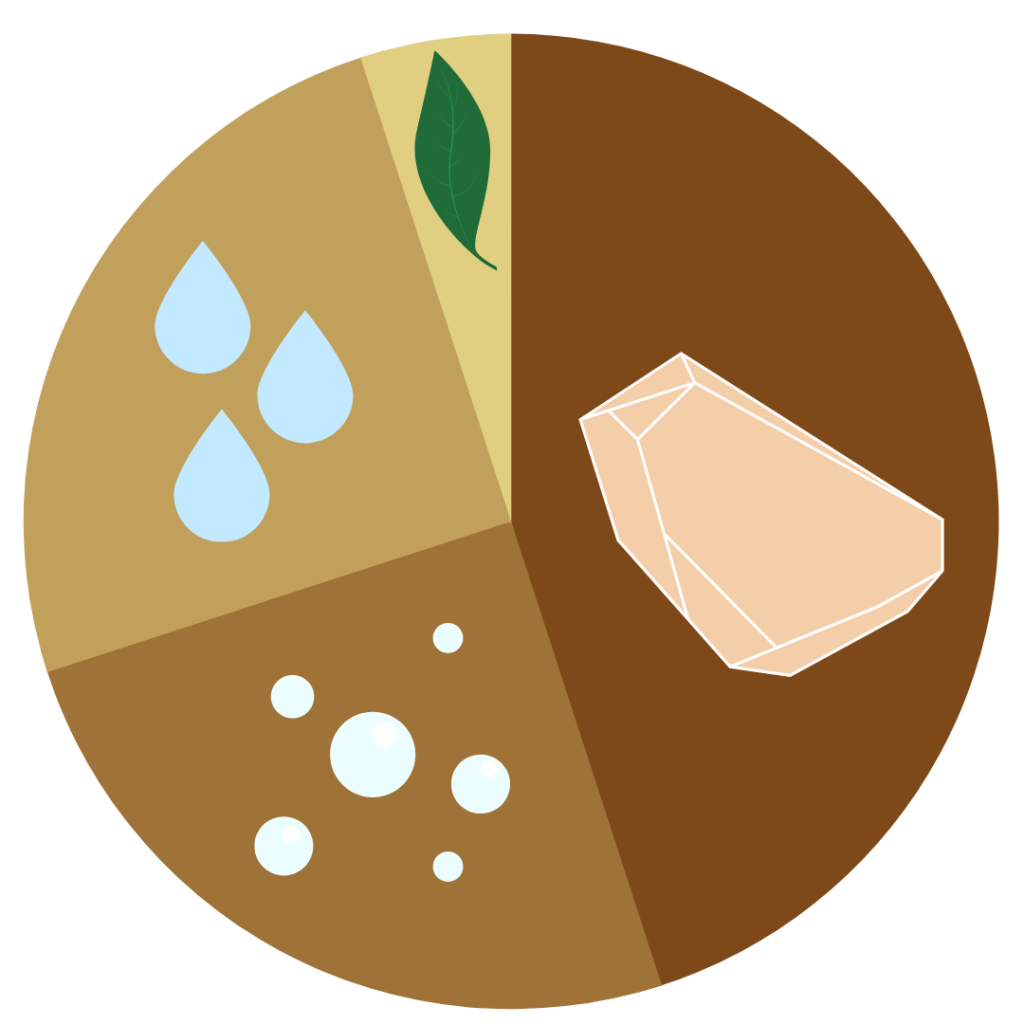
These four elements are not present in equal parts. Ideally (from a human perspective), a soil is composed of:
- 45% mineral material (tiny pieces of rocks)
- 25% air
- 25% water
- 5% organic matter.
Each element is critical to the soil: the mineral material makes up the bulk of the soil, the air (i.e., empty space) allows for the movement of water and gases, the water transports nutrients, and the organic matter retains moisture and nutrients.
Just having those things doesn’t make material soil, though: a rock could have holes in it that allow air and water to move through it while also hosting some moss. What sets soil apart is that it is generally loose or unconsolidated material; that is, it is made up of individual particles or clumps (a.k.a, aggregates) of those particles. Therefore, a rock cannot be considered soil because it is made up of one solid material.
Now that we have a general idea of where we can find soil and what it’s made of, let’s talk about why soils are so important.
What do soils do?
Soils do so much more than provide a growing medium for plants and a foundation for our infrastructure. In fact, we rely on soils for pretty much every element of human existence.
Thanks to their ability to support plant life, we use soils to grow our food. Soils are also needed to grow feed for livestock. There’s more than just plants living in the soil, however: the microbiota found in the soil has been used to develop numerous useful chemicals and medications. Macrofauna also exist in the soil, like insects, earthworms, moles, and other creatures.
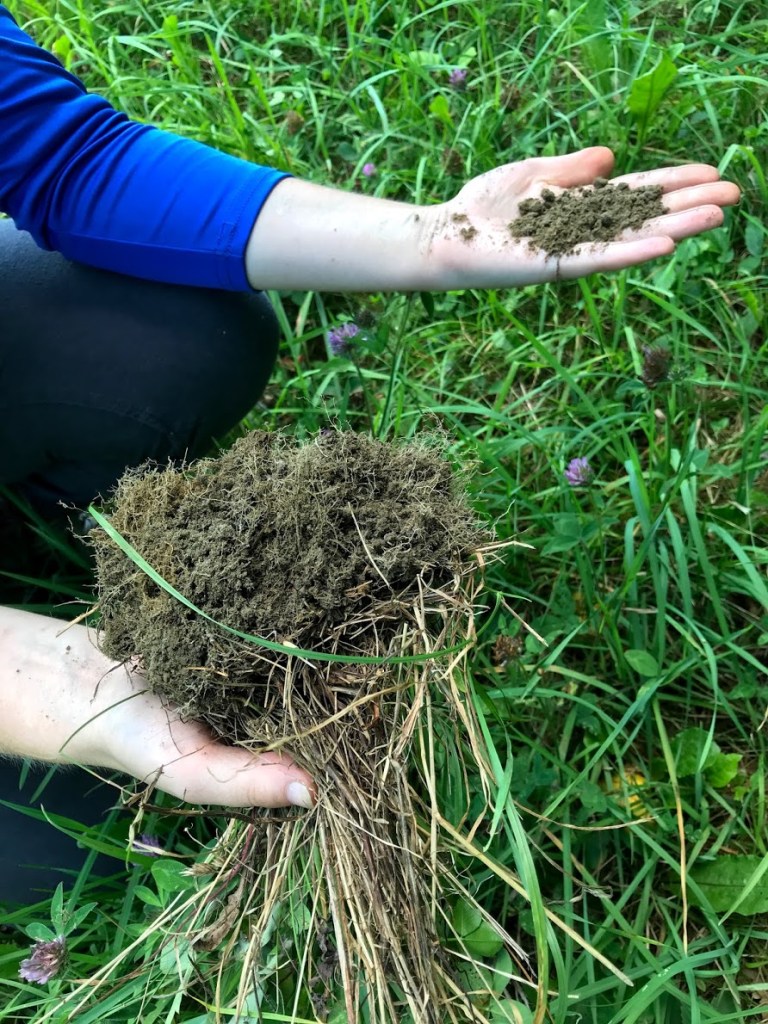
We also use soils for their physical properties: many soils allow water to move through them. This keeps our roads and homes from flooding after rain. If we compact them, soils can be used as a foundation for infrastructure.
More recently, we have learned that soils are important to the fight against climate change. Soils have the ability to store carbon, keeping it out of the atmosphere and mitigating the greenhouse effect.
Soils are critical to life on Earth, so it’s vital that we understand how to identify them and how they benefit all of us. Now that we’ve learned the basics of what soil is and does, we can dive into the science of soil!
 The Science of Soils